Color Your Name
Experience Design | Concept Development
A collective artwork for everyone.
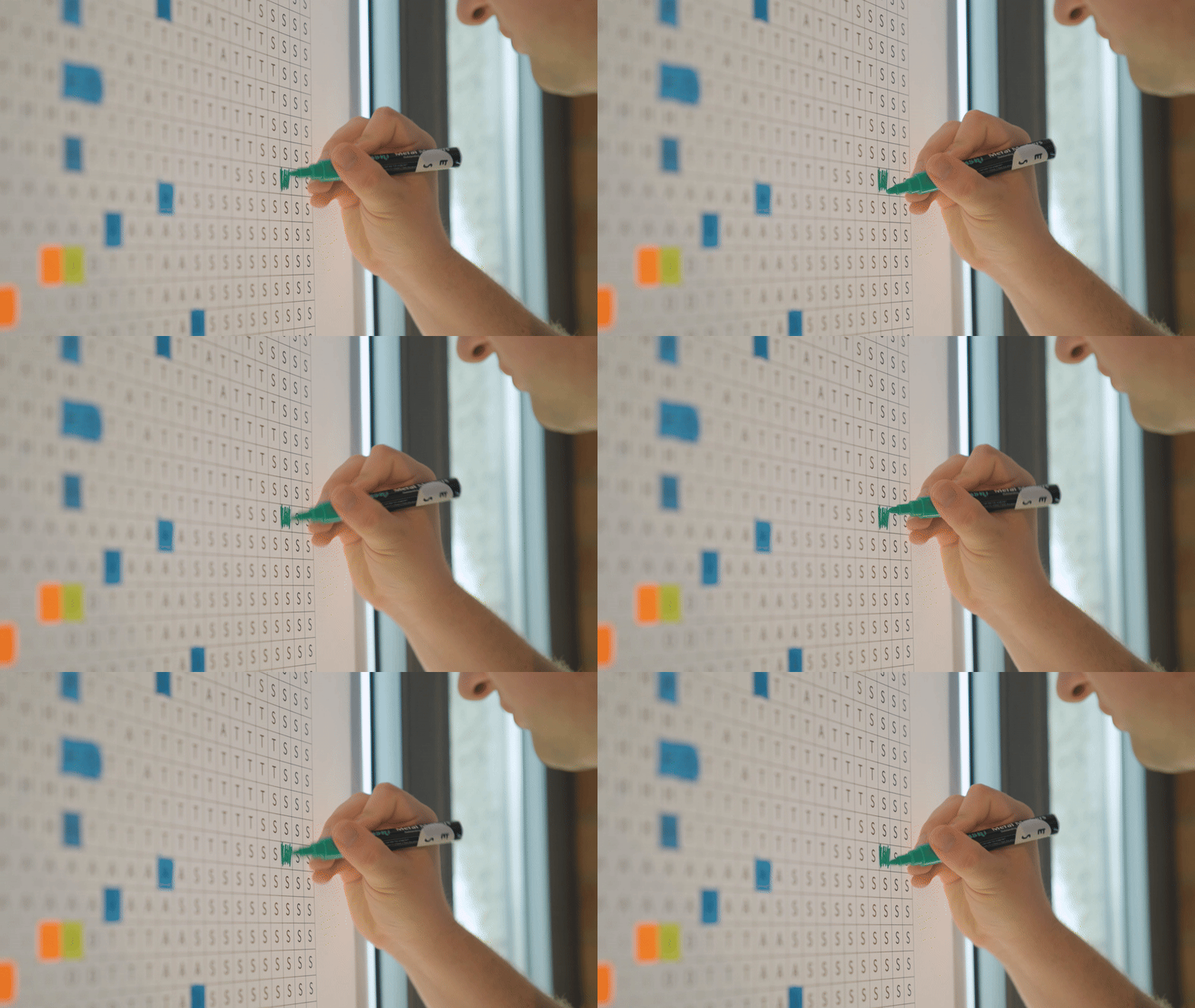
To bring more creativity and interaction into the annual event for language professionals, I designed a playful participation wall that turns guests into co-creators. Instead of leaving a signature, everyone contributed to a shared artwork that evolved throughout the event.
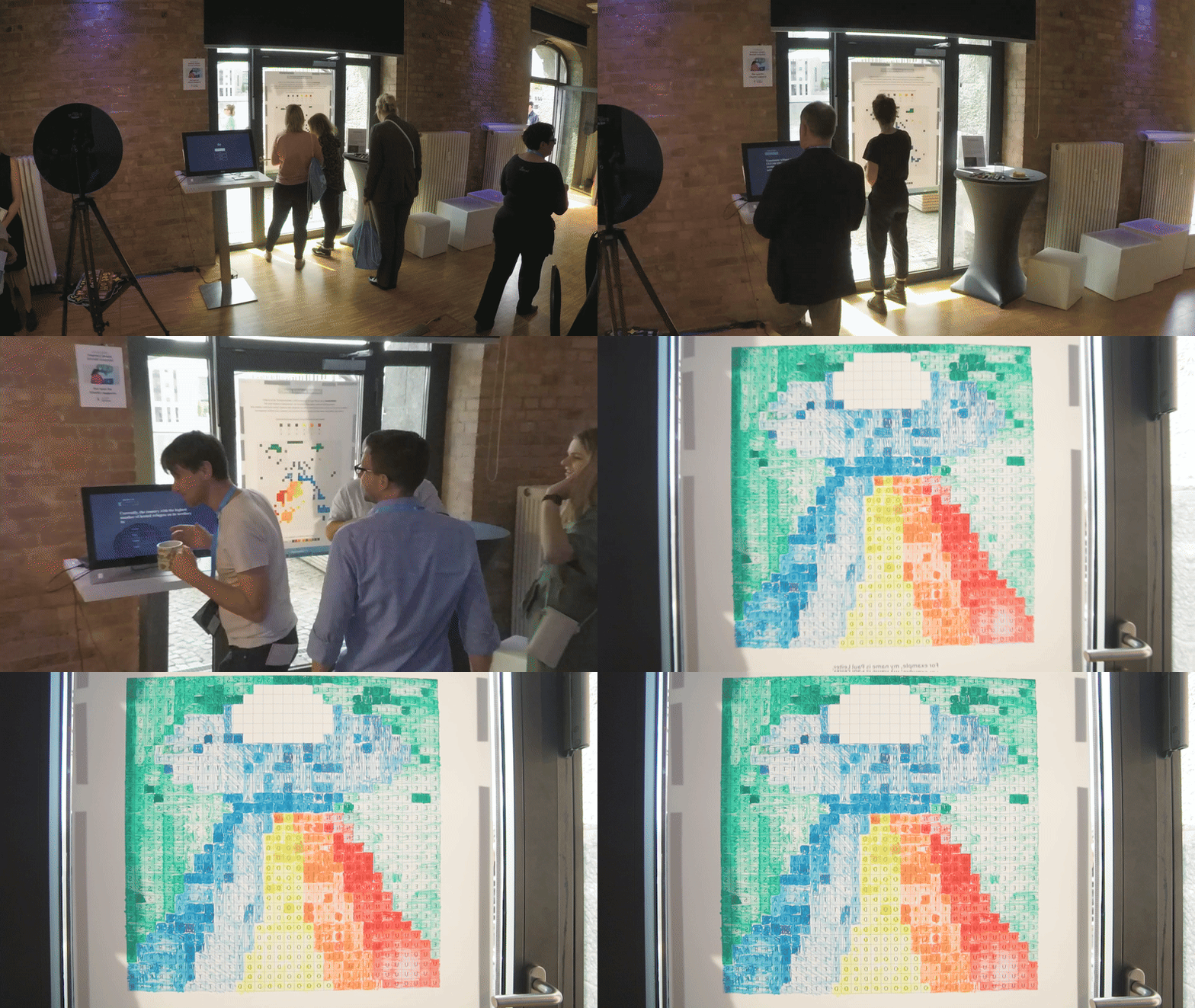
The concept is built around a language fact: the 12 most frequently used letters in English ( E , T , A , O , I , N , S , H , R , D , L , U ) arranged by frequency. Guests were invited to color the letters that appear in their names. As more people joined in, the board gradually revealed a hidden surprise: a UFO 🛸 (company's mascot) emerging from the collective pattern.
Core idea: Turn a simple action into a shared outcome: each guest contributes one small part, and together it reveals something bigger.



Outcome
The installation became a high-engagement touchpoint throughout the event. Guests gathered around the wall, compared names, and kept coming back as the artwork evolved. What started as a playful activity also became a strategic brand moment: it reinforced Plunet’s personality, created a shared experience, and left the event with a visual artifact shaped by the community itself.
Color the following letter(s) if any of these is in your name.
︎
E
S
E
S
︎
T
H
T
H
︎
A
R
A
R
︎
O
D
O
D
︎
I
L
I
L
︎
N
U
N
U
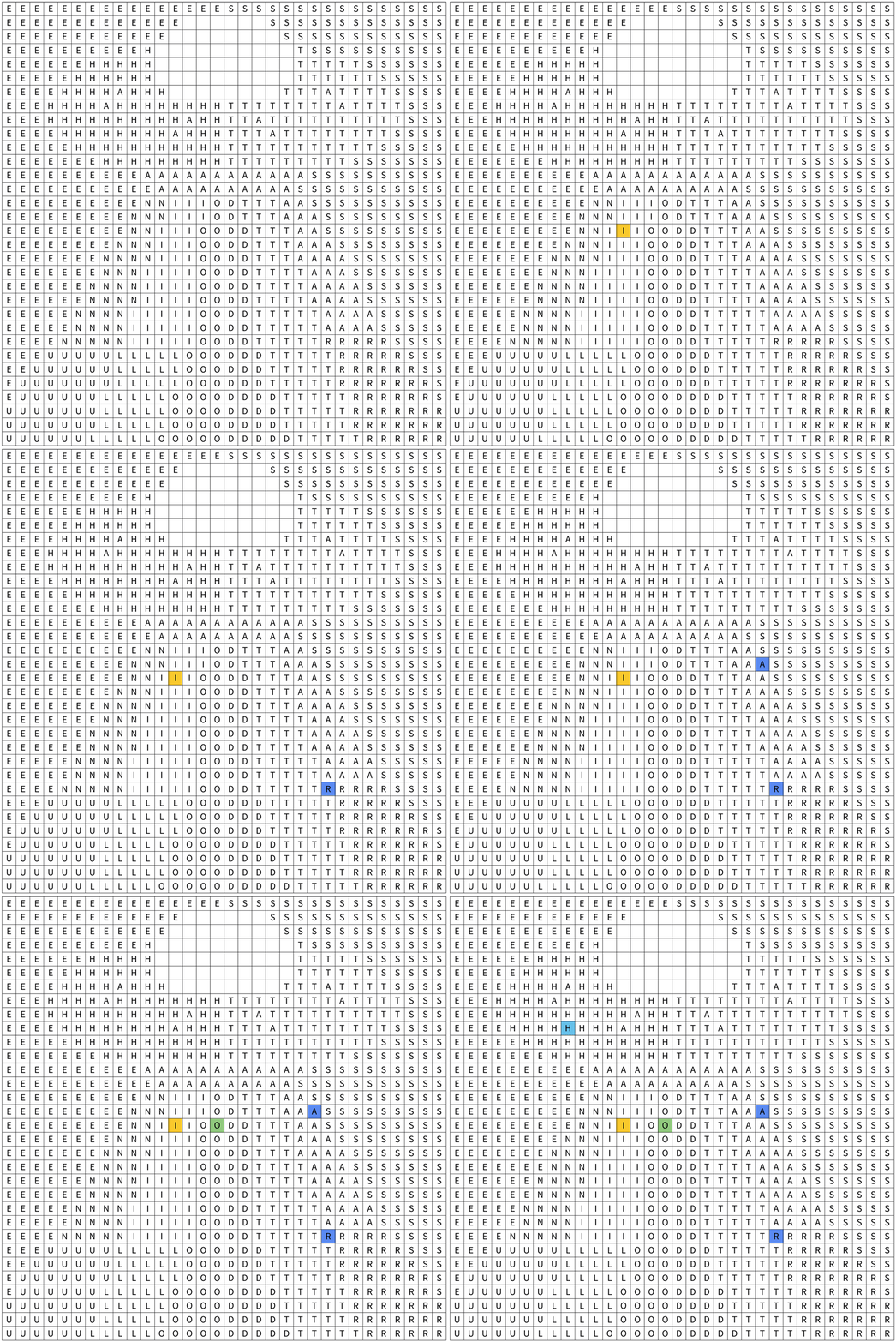
For example, my name is Kira Chow.
I will color:
K I R A C H O W
I will color:
K I R A C H O W
What is Etaoin Shrdlu?
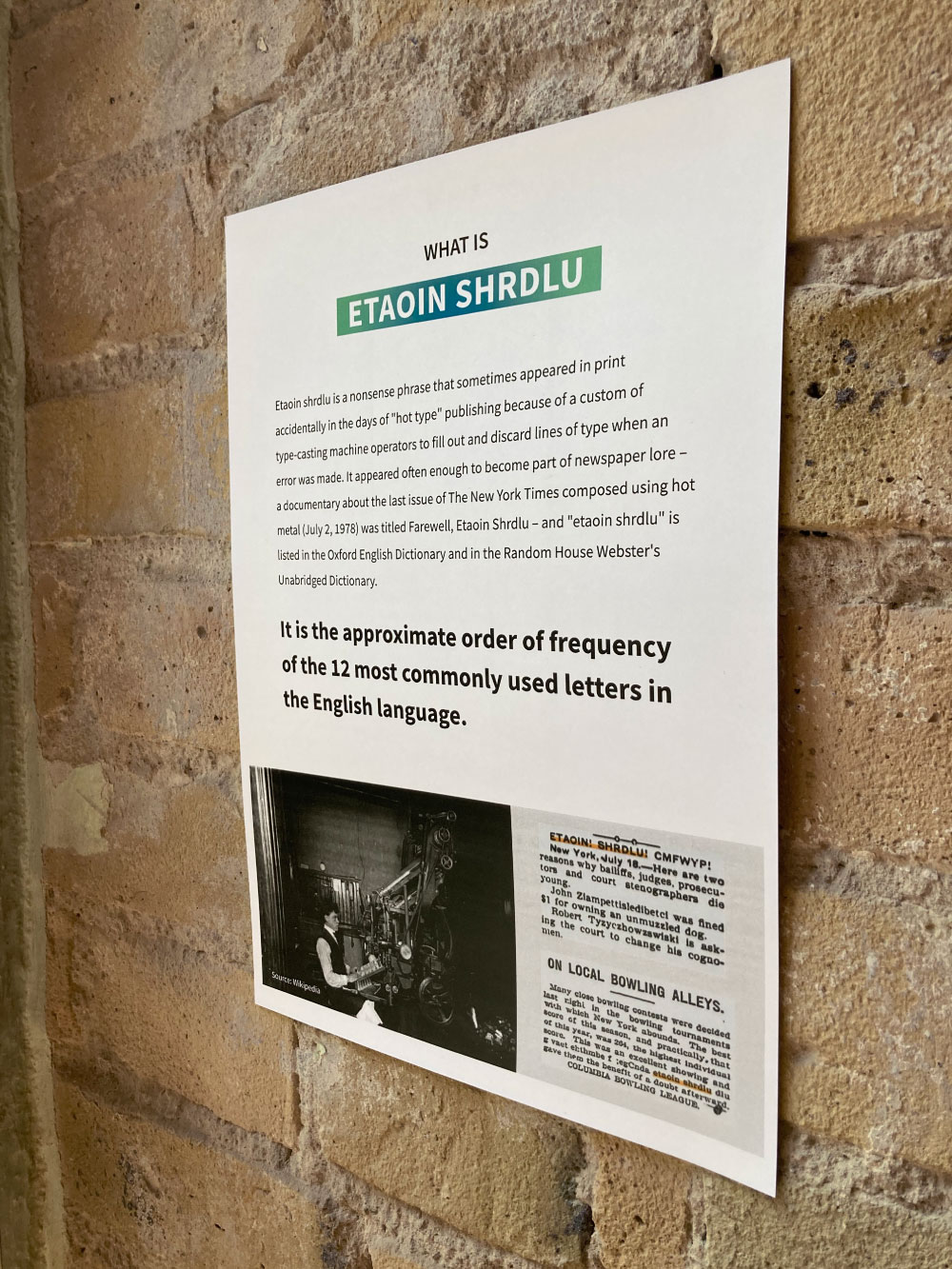
Etaoin shrdlu is a nonsense phrase that sometimes appeared in print accidentally in the days of "hot type" publishing because of a custom of type-casting machine operators to fill out and discard lines of type when an error was made. It appeared often enough to become part of newspaper lore – a documentary about the last issue of The New York Times composed using hot metal (July 2, 1978) was titled Farewell, Etaoin Shrdlu – and "etaoin shrdlu" is listed in the Oxford English Dictionary and in the Random House Webster's Unabridged Dictionary. It is the approximate order of frequency of the 12 most commonly used letters in the English language.

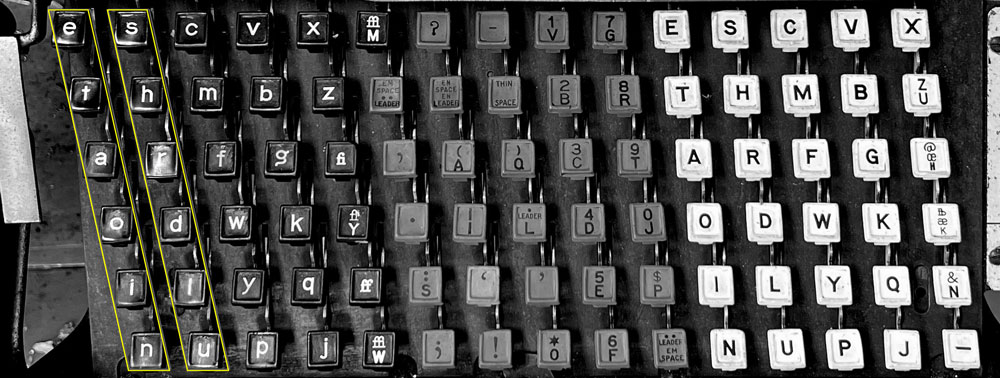
Source: Wikipedia